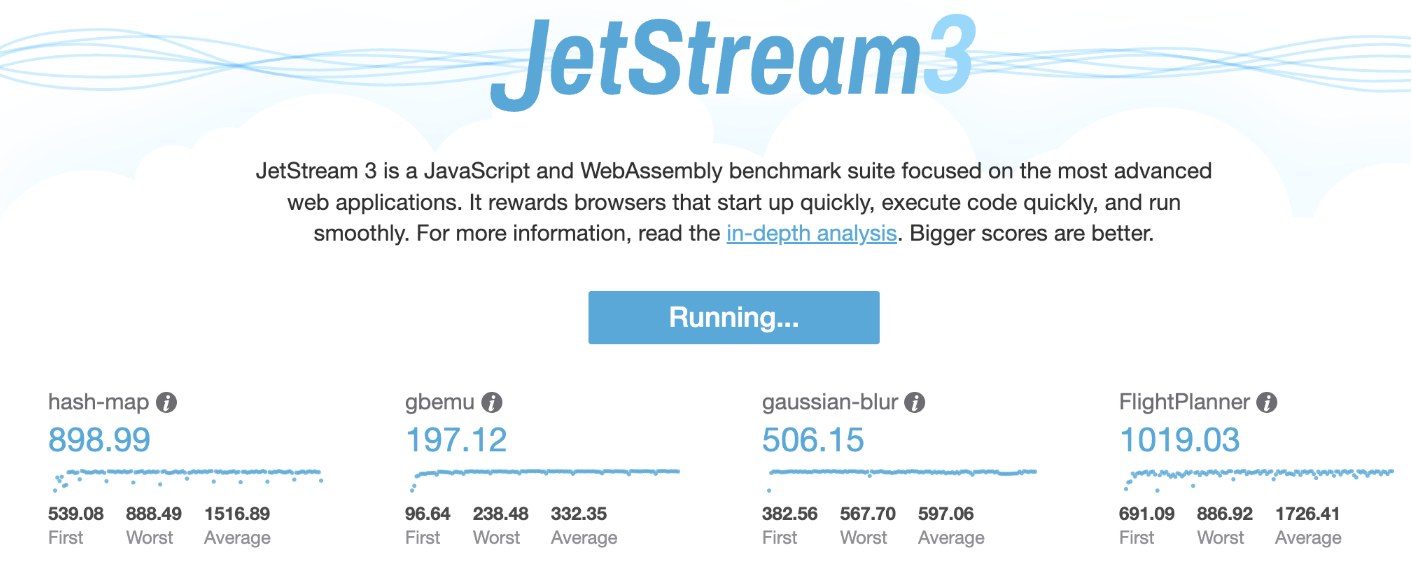
JetStream 3 gives browser developers a new way to compare demanding JavaScript and WebAssembly work. Announced on 31 March in the US, the benchmark updates the workloads used to measure computing performance inside a browser, with input from Apple, Google and Mozilla.
For everyone else, its main value is knowing what a reported score can tell you. JetStream measures a particular class of work. It cannot, on its own, tell you which browser will make your usual afternoon feel faster.
More of the work modern web apps perform
The new suite adds 12 WebAssembly workloads, drawing on languages and toolchains including Java, Kotlin, Dart, Rust and C#. Google says WebAssembly now accounts for roughly 15–20 per cent of the suite, up from around 7 per cent in JetStream 2.
WebAssembly lets applications bring compiled code to the browser. That matters for demanding tools such as editors and other software that performs substantial computation locally. Including a broader selection of that work makes the benchmark more representative of the applications browser engines increasingly need to run.
JetStream also pays attention to how performance behaves across execution, rather than treating the quickest isolated moment as the entire result. Developers can use the workloads to find regressions and assess changes to their engines.
Why one score does not choose your browser
JetStream and Speedometer answer different questions. JetStream emphasises JavaScript and WebAssembly computation. Speedometer exercises interactions in web applications, including work involving the page’s document structure and user interface.
A slow page might instead be waiting for a distant server, downloading large images or handling an extension. None of those problems disappears because its browser records a strong computation score.
When comparing published results, keep the benchmark version, hardware, operating system and browser versions together. A number without those details is difficult to interpret. Scores from JetStream 2 and JetStream 3 are not a simple before-and-after comparison because the suite itself has changed.
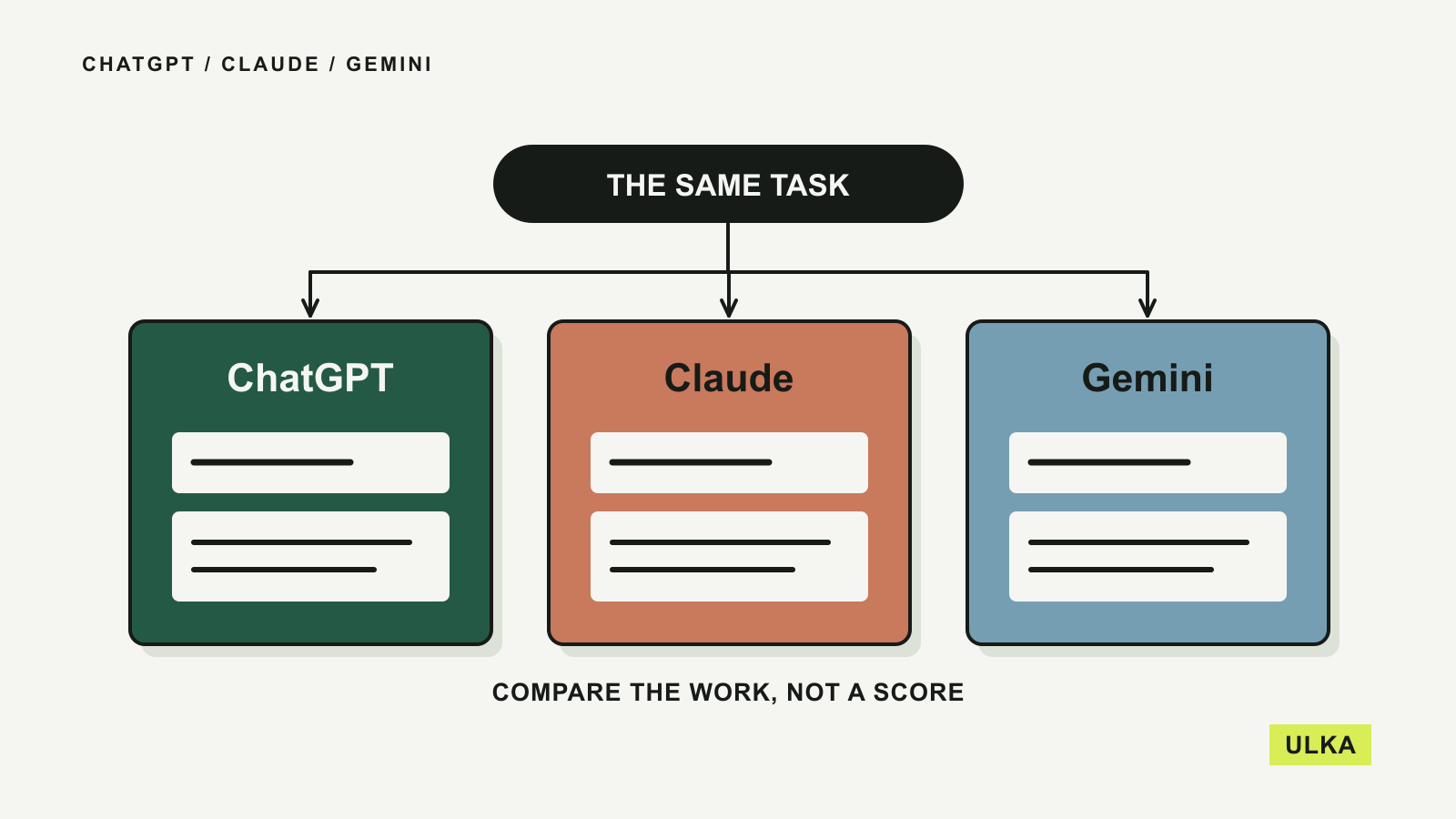
For a practical choice, also consider the web apps you use, accessibility, extension requirements and battery behaviour. ULKA’s Computing section covers those broader decisions. We have not run a browser shootout for this announcement, so there is no ULKA performance ranking attached to it.
Questions
Does JetStream measure broadband speed?
No. It focuses on code execution inside the browser, not the speed of your internet service.
Can it replace Speedometer?
The suites cover different work. Their results can complement one another without being interchangeable.
Does a higher score guarantee faster browsing?
It indicates stronger performance in the tested workloads. Your applications, connection and configuration still matter.
Sources
Google Chromium Blog, JetStream 3: a modern benchmark for high-performance, compute-intensive web applications, 31 March 2026. Cover: the benchmark interface example published with Google’s announcement; its displayed scores are not ULKA test results.