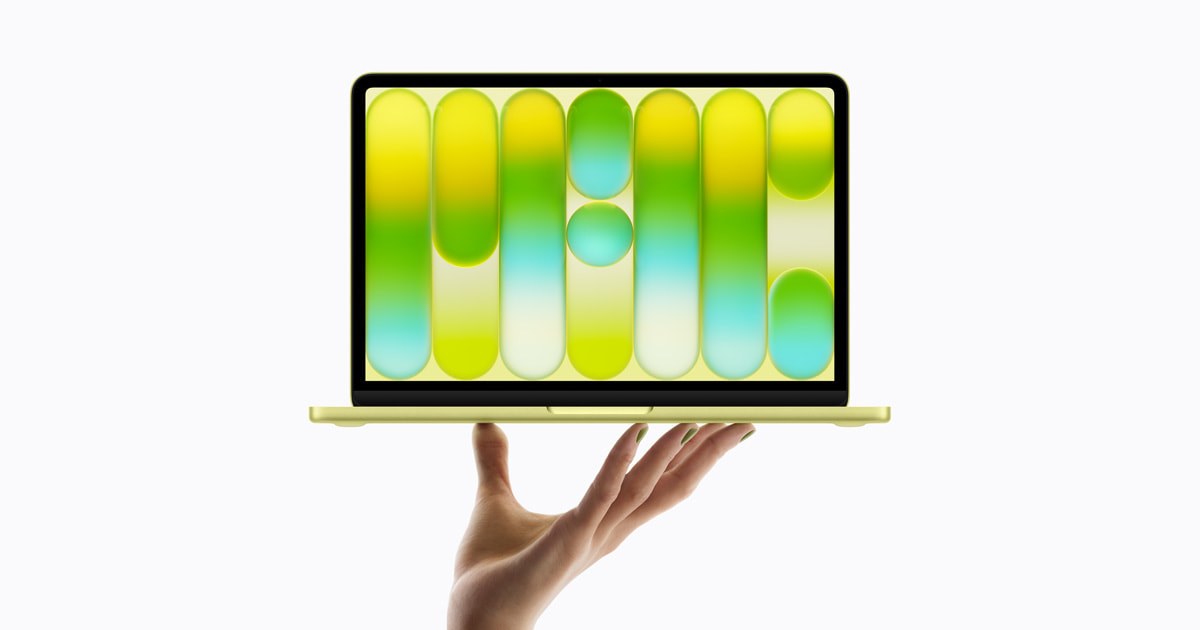
Apple has introduced MacBook Neo, a 13-inch laptop powered by the A18 Pro chip. Announced on 4 March, it gives buyers another route into macOS alongside the MacBook Air and MacBook Pro. Apple lists a starting US price of US$599, with availability beginning on 11 March; that figure is not an Australian retail price.
The Neo has an aluminium enclosure, comes in silver, blush, indigo and citrus, and uses a fanless design. Apple is positioning it for ordinary computing, including web browsing, documents, video calls and light creative work.
What the lower starting price includes
The display measures 13 inches and has a resolution of 2408 by 1506 pixels. Apple specifies 500 nits of brightness and support for one billion colours. There is a 1080p FaceTime HD camera, two microphones and side-firing speakers, along with a Magic Keyboard and Multi-Touch trackpad.
The A18 Pro has a five-core GPU and a 16-core Neural Engine. Its appearance in this laptop is a useful reminder that the processor family alone does not tell you whether a computer suits your work. The applications, memory requirements, ports and storage configuration still need to match the job.
Apple says the Neo runs macOS Tahoe and supports Apple Intelligence. The company’s launch material describes everyday applications such as Safari, Excel and Canva. Someone buying for a course or workplace should nevertheless check the exact required software, including any applications restricted to another operating system.
Read performance claims in context
Apple advertises up to 16 hours of battery life and makes several speed comparisons with a PC using Intel Core Ultra 5. These are vendor measurements under selected conditions. They do not establish how long the laptop will last through your mix of video calls, browser tabs and screen brightness settings.
A fanless computer may appeal to someone who values quiet operation. Buyers with long, demanding workloads should wait for evidence showing sustained performance in the applications they use. A short benchmark and a lengthy export can place different demands on a laptop.
The affordable starting configuration also needs to be compared with the final checkout price. Storage choices and the accessories needed for an existing desk setup can change the total. For Australian readers, compare Australian prices directly, including tax and local support arrangements, rather than converting the US launch figure into an assumed local offer.
The Neo’s arrival gives prospective Mac buyers a concrete choice to investigate: whether a lower-priced machine covers their daily requirements, or whether an Air configuration offers features they will use. Make that comparison with a list of required applications and peripherals in front of you.
Follow new laptops and practical buying questions in Computing.
Source: Apple Newsroom, “Say hello to MacBook Neo”, 4 March 2026. Product image: Apple.